
Words Tom BarkerImages Lou Mora
“The home breathes the same way our hotels do,” says Avi, Palisociety’s founder and Chief Creative Officer. “The sensibility is the same in that there’s comfort, beauty, and a story behind the quirky details. The house is filled with objects we’ve collected, furniture that’s reupholstered, art and objects that feel handmade.” This ilk of mishmashed interior design, which Palisociety dubs its “unapologetically eclectic aesthetic,” is his specialty, conceived in Palisociety’s first Californian outpost then refined with every new location.
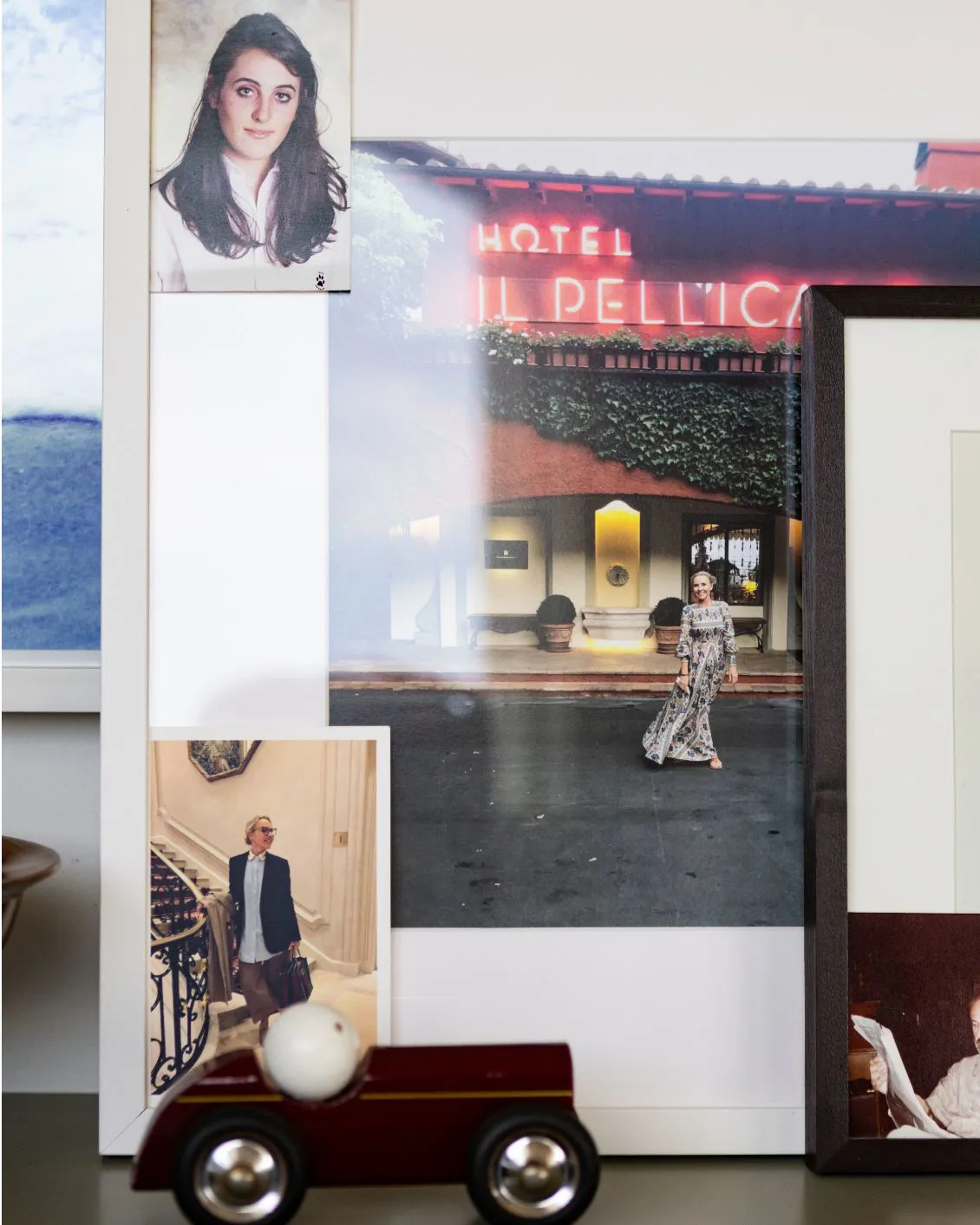
A look inside Avi and Kirsten’s Malibu cottage filled with photos, keepsakes, and art
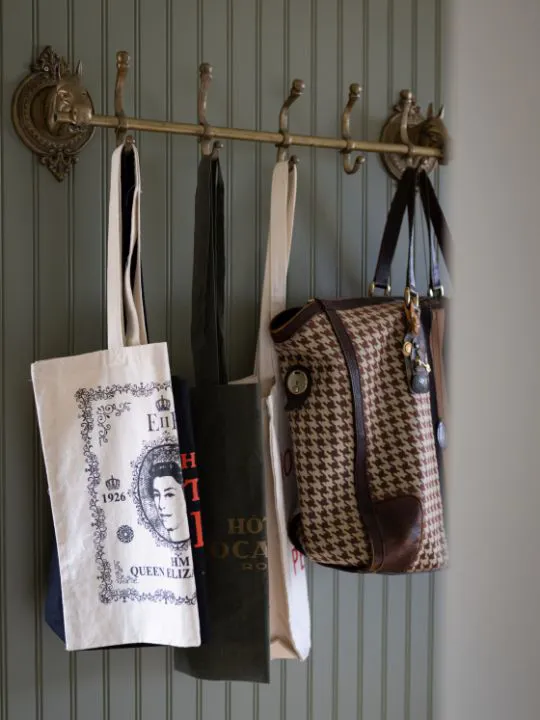
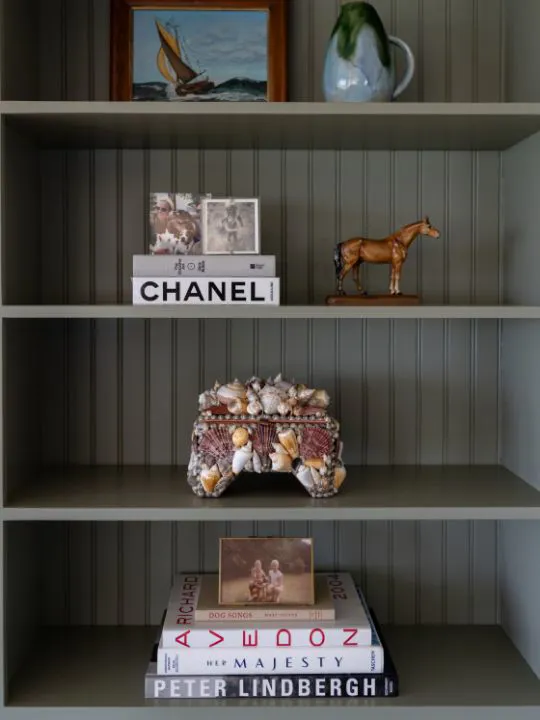
Today, Palisociety has around two dozen properties, split into five categories. Four are well-defined—Le Petit Pali, for instance, shrinks the group’s philosophy to intimate inns, whereas ARRIVE by Palisociety reacts to the surrounding city culture—while The Independent Collection is more fluid, comprising hotels too singular to fit into any brand. The Hôtel Lili in Beverly Hills is one of these uncategorizable hotels, a grand residence built in 1939 and reimagined with red velvet curtains and patterned wallpapers, creating a luxurious old-world feel that’s somehow still reminiscent of Avi and Kirsten’s cozy cottage.
The husband-and-wife duo (Kirsten is a principal, overseeing brand identity and design) have followed their eclectic instincts without compromise, both at home and in their hotels. However, as Avi is quick to point out: “At our home, there’s clutter in the best sense, evidence of a life being lived. A hotel room has to be slightly more curated because it’s a stage for someone else’s story.”

Even at his desk Avi is surrounded by quirky decorations

Avi is surrounded by quirky decorations


Avi: It was somewhat terrifying, but also clarifying. We couldn’t compete on scale or marketing budgets, so we competed on uniqueness and word of mouth. We had to make people feel something the moment they walked into our hotels. Every dollar spent had to matter; every choice had to mean something. I think that discipline never really left us, as we still approach each and every project as if we can’t afford to get it wrong.
A collision of new and old, with no hard and fast rules.
The instinct behind the Palisociety aesthetic has always been the same, but the quality of the work has refined considerably. You learn a lot after making close to 30 hotels; you see what works and connects. Generic trendy places get old fast. Layered and authentic places get better and more beautiful over time.


Avi Brosh

As you scale, there’s an underlying pressure to make decisions quickly, to standardize, to streamline. The hardest thing is protecting the integrity, commitment, and attention to detail it took for us to get here. Kirsten is the person who insists on that most fiercely. She’ll stop a project cold if she feels we’re rushing toward an answer before we’ve really understood the question or are veering too far from the original vision or ethos of the brand. That protection has kept us very honest.
Kirsten has the most important and impactful opinions for my creative process. I don’t always agree with her, but there’s a level of trust and respect in her point of view that I always benchmark my work against. We can be completely honest with each other in a way that only comes with time and is essentially impossible with most collaborators. Our ongoing spirited conversations and collaboration are what prevent us from making something average.

Avi and Kirsten are a husband-and-wife duo pushing to keep Palisociety’s original vision alive


Avi Brosh

The consistency is in our placemaking values and our design vocabulary. We’re always trying to evoke a sense of independence and beauty, but at the same time we ask ourselves if our point of view belongs here, in this city, on this street? And does the story we’re trying to tell have our signature point of view?
We’re not applying a look. We’re applying a vibe and a way of thinking. The danger in growing a brand is that you start copying your own greatest hits; we work hard to resist that and maintain the integrity of our tone.


Inside Le Petit Pali Laguna Beach, a midcentury seaside lodge showcasing Palisociety’s eclectic tastes
Taste is, of course, subjective, but is not necessarily a learned trait. You either have a sensitivity and awareness to how things are meant to come together, or you don’t. That said, taste without constant exposure and evolution can become narrow and provincial.
The people and places I find most interesting are usually the ones that tell the most authentic stories. They’ve earned their confidence.
Hotels are never really finished. I consider all of our spaces a constant work in progress to a certain degree.

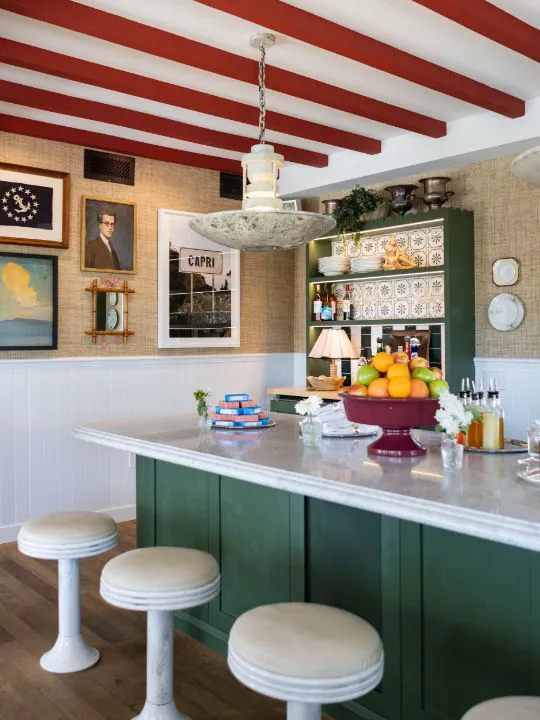
Combining different textures, patterns, and colors is a signature Palisociety trope

The conviction and devotion to the integrity of the brand have always been sacrosanct and remained constant.
I’ve come to understand that you can build the most beautiful spaces in the world, but an experience that feels overly transactional can dim how a guest experiences a hotel’s design in thirty seconds. Culture and tone of service are design too.


We have properties coming that I’m excited about in a way I haven’t felt since the early days. There’s something happening at the intersection of travel and community, and we’re positioned to do something interesting in that space.
Kirsten and I talk a lot about building something that outlasts us, a company with a culture so strong and a point of view so clear that it doesn’t depend on us being in every room making every call. That’s the real long project.





 Profile
 Bookings
 Benefits
 Bookmarks
 Exclusive Community Deal