
Words & Images Chris SchalkxDate 30 September 2026
But for a crash course in where Thai architecture has been, and where it’s headed next, it’s worth leaving Bangkok behind. About an hour to the north, the ancient capital of Ayutthaya offers a cross section of six centuries’ worth of architectural history. Within a few square miles, you can tuk-tuk-hop from Khmer-inspired temple towers to Sri Lankan-style stupas, Victorian follies, and some of the country’s most innovative contemporary buildings.

The iconic Buddha head at Wat Mahathat

Bang Pa-In Palace brings global influences into one royal estate
The city’s story begins, of course, with its ruins. Founded in 1350 at the confluence of three of the region’s most important waterways, Ayutthaya spent more than four centuries as the capital of Siam, the kingdom that laid the foundation for modern-day Thailand. By the 1700s, as merchants, missionaries, and monarchs arrived from as far afield as Portugal and Japan, it had grown into one of the world’s largest cities and become a powerhouse of art and architecture. That prosperity came to an abrupt end in 1767, when Burmese forces sacked the city after a months long siege and reduced its palaces, monasteries, and temples to rubble.
Still, Ayutthaya’s architectural spirit never really disappeared. Today, the buildings’ ruined remains still dominate the landscape, and the city’s historic heart gained UNESCO World Heritage status in 1991. Among the most recognizable leftovers is Wat Phra Si Sanphet, the holiest of holies, built on the former royal temple grounds. Its three bell-shaped chedis tower above a jumble of pillars and platforms in various states of restoration, and have become one of the city’s most-photographed postcard sights (second only, perhaps, to Wat Mahathat’s Buddha head, swallowed by a tangle of ficus roots). While much of the complex drew on Sri Lankan Buddhist architecture, excavations nearby also uncovered design references borrowed from churches and temples in Europe and Persia.

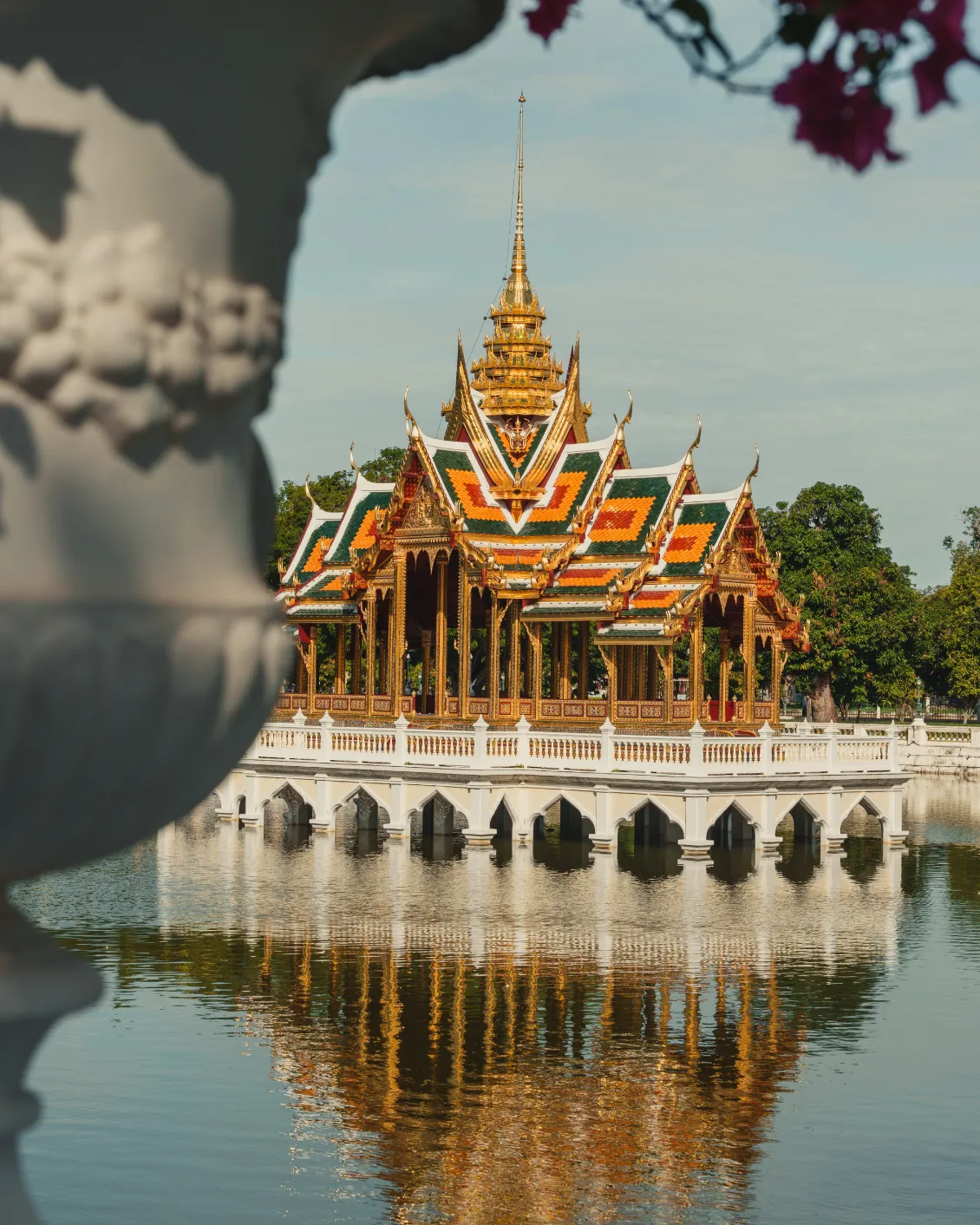
The Ayutthaya Kingdom was the capital of Siam for more than 400 years
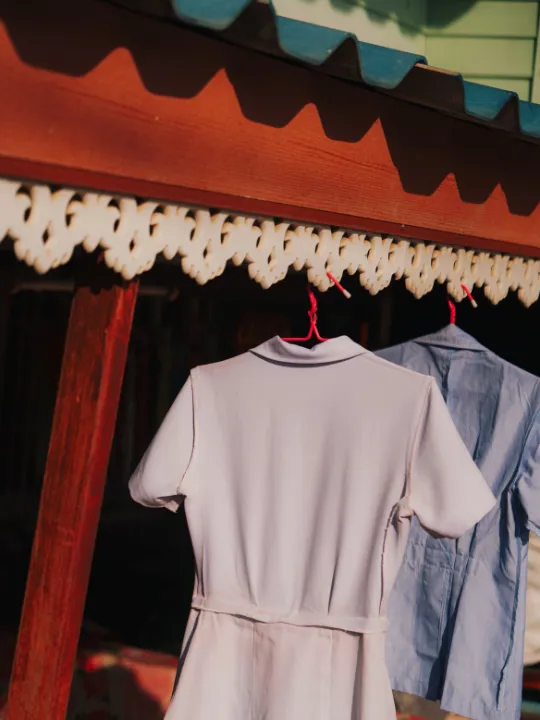
Scenes from the local village
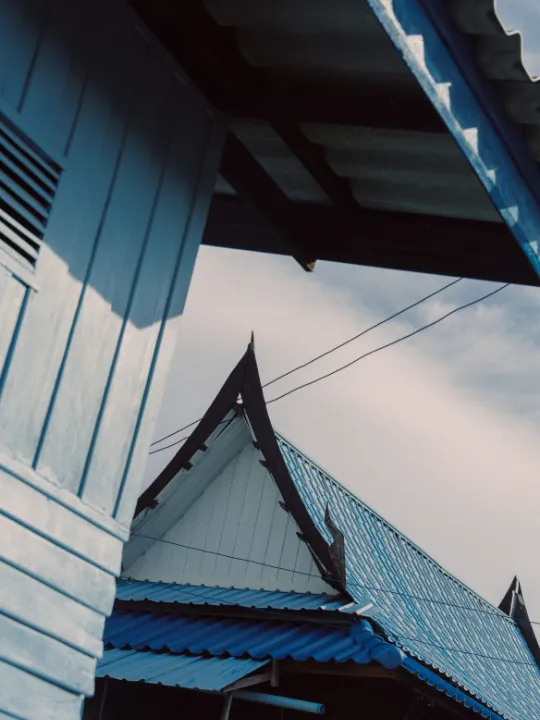
Today’s architects have turned to homes and everyday scenes for inspiration
A short ride away, the walled remains of Wat Chaiwatthanaram echo the kingdom’s Khmer influences. Built in 1630 on the banks of the Chao Phraya River, its soaring central prang, a hallmark of Khmer temple architecture, rises like a giant corncob over eight smaller chedis and row after row of (since decapitated) Buddha statues. Unlike the sandstone and laterite temples of the Khmer Empire, however, Ayutthaya’s builders relied on bricks molded from clay sourced from the surrounding floodplains. Many of these structures were once covered in intricate stucco carvings and gilded details, a far cry from the crumbling terracotta piles that remain today.
While much of ancient Ayutthaya had vanished by the end of the 18th century, the city continued to be a melting pot of architectural ideas. Case in point: The Bang Pa-In Royal Palace, about 30 minutes downriver from the city’s central temples, which has been a royal summer residence since 1632. While it fell into disrepair after the kingdom’s collapse, later monarchs, most notably King Chulalongkorn in the late 19th century, transformed it into an eclectic showcase of global styles. In its sprawling, pond-dotted gardens, wooden pavilions with gingerbread trims now stand beside sherbet-colored Victorian halls that resemble oversized wedding cakes, while stone lions guard Chinese temples and Renaissance-style statues line white stucco bridges. It’s an unlikely ensemble, but perhaps the clearest reminder that Thai architecture has always been a hodgepodge of sorts.


Central Ayutthaya Mall translates ancient masonry into a contemporary façade

The shopping mall by Bangkok-based firm Onion from another angle
Today’s architects are doing much the same, and draw on Ayutthaya’s bricks and shapes to sketch out a new generation of landmarks. At sala ayutthaya, a restaurant and hotel overlooking the 700-year-old Wat Phutthaisawan temple, Bangkok-based design firm Onion channeled the city’s terracotta structures with curved, canyon-like walls built from local brick and white stuccoed guest areas that nod to the ancient temples’ erstwhile coating. Even the hanging lamps in the glass-walled restaurant are shaped like ancient stupas, while the swimming pool and riverfront terrace nod to the multi-tiered design of Indian stepwells.
The textures of ancient masonry also take center stage at the sprawling Central Ayutthaya mall, where Onion translated the proportions and shapes of the city’s ruins into a rippling terracotta façade, while the rooflines and recessed corners nod to design details discovered in temple ruins nearby. Similarly, in the rice fields just west of town, local design studio BodinChapa Architects’ NAYA Cafe reworked terracotta bricks into sweeping, grain-inspired curves.
But not every architect looked to the grand landmarks for inspiration. For The Artisans Ayutthaya, a home-style Thai restaurant along the river, renowned Thai architect Boonserm Premthada borrowed from vernacular village homes. Much like Ayutthaya’s small rural communities, the restaurant spreads out over several angular buildings, each one built from PVC, timber, and glass bricks that blend low-cost, industrial materials with age-old craft techniques.

Twitee Vajrabhaya, one of the architects behind Sala Bang Pa-In, shows us around

Sala Bang Pa-In was influenced by riverside village homes

A similar philosophy became the foundation for sala bang pa-in, a 24-room hotel on a tree-lined islet in the Chao Phraya River. Spearheaded by Bangkok-based Department of ARCHITECTURE Co., Ltd., this small resort eschewed the obvious temple references for a look that draws on the villages still clinging to the surrounding riverbanks. “We didn’t study old Thai structures,” says principal architect Twitee Vajrabhaya. “We looked at the contemporary houses around the site.” Instead of copying historic shapes, Vajrabhaya and her team took inspiration from the surrounding homes’ low-pitched roofs, clustered layouts, and bold colors, and translated these elements into rooms and private pool villas with crisp lines and colorful details such as indigo-dyed pillows and fish-shaped pla taphian—a local handicraft—folded from palm leaves.
“The inspiration never stops,” Vajrabhaya says. “Architecture shouldn’t just look back at history. It should also learn from what’s happening around it today.” In a city where outside influences have been absorbed and remolded for centuries, that’s hardly a radical idea: For all its brick walls and bell-shaped chedis, Ayutthaya’s most enduring architectural tradition is its willingness to keep evolving.


This story appears in the Fall/Winter 2026 issue of Directions, our broadsheet magazine spotlighting the ideas, places, and perspectives shaping our world. Pick up a copy at our member hotels.




 Profile
 Bookings
 Benefits
 Bookmarks
 Exclusive Community Deal