
Words Vidula Kotian
It’s that particular meeting of space, senses, and people that you can’t quite pin down and can’t fake. You can’t book it in advance. You can only go out and find it. That’s what we went looking for in this year’s list: a Belle Époque quarter waking up after decades of sleep, a coastline telling its thousand-year story in new ways, and creatives leaving the megacities for mountains and lakes. We found the hush that falls over Meteora’s rocks at first light, and the buzz of a Cairo rooftop as dinner stretches past midnight. We found a forest in Lapland turning blue at dusk, and a Glasgow table where the conversation outlasts the last pint.
Nine destinations, each home to one of our newest member hotels, and each with a vibe all its own. Long after the trip, it’s the part you’ll still be trying to describe.


Norway’s Atlantic coast is telling its own story. A new museum in Lofoten enters its first full season, an art festival spreads across the islands under the midnight sun, and in the fishing village of Henningsvær a new hotel opens onto the harbor. Nearly all of it comes back to one fish.
Every winter, the skrei, the Northeast Arctic cod, leave the Barents Sea to spawn along this coast, as they have for a thousand years. Come between February and April and you’ll see the season’s catch hanging to dry on wooden racks along the shore, as it has for centuries.
Start in Ålesund, which a fire swept through in a single January night in 1904 and which was rebuilt almost at once in Jugendstil: turrets, carved dragon heads, and pastel façades rising straight from the water.
Hotel Brosundet occupies one of the old fish warehouses, now listed as a National Art Nouveau Landmark. Oslo-based architecture firm Snøhetta turned it into a hotel where fishing boats pass just below your window, and its most unusual room is a five-minute walk away, inside the Molja lighthouse. In 2025, it was among the first Nordic hotels to receive a MICHELIN Key, and it held on to it in 2026.


Christopher Haugen, General Manager, Salteriet

Then follow the cod north, past the Arctic Circle. In Kabelvåg, the new SKREI museum tells the fish’s story in The Otolith, a 5,000-square-meter building named after the cod’s ear stone. From late May to late June, the Lofoten International Art Festival takes over the archipelago, curated by Filipa Ramos, whose work explores how art reshapes our relationship with animals and the natural world. Her edition is built around sound and listening, guided by her belief that art “opens unique ways of listening, observing, and being-with.” The midnight sun makes a fitting stage for it.
A short drive along the coast lies Henningsvær, where fishing boats still work the harbor and galleries, workshops, and cafés have drawn a new generation north. Here Salteriet, which opens this spring, sits right by the water. Designer Peder Snekvik, working with HEIMR, shaped its 48 rooms and five suites from the village itself. “We’re not designing around Henningsvær,” Peder says. “We’re designing from it.” Go fishing in the morning and the kitchen will cook your catch. There’s no gym; there’s Lofoten, and two outdoor bathtubs waiting when you come back.


For a century, visitors came to Cairo for its past. Today, the city is making the case for its present. With Tutankhamun’s treasures rehoused at the Grand Egyptian Museum in Giza, attention is turning back to Downtown, the Belle Époque quarter whose faded apartment blocks are coming back to life.
A new generation is filling them. Designers are reworking old crafts rather than copying them, turning the humble palm-frond chair into a collector’s piece. Young chefs, many trained in Europe, are cooking Egyptian food with fresh confidence. Each autumn, the Cairo International Art District and the Downtown Contemporary Arts Festival fill historic buildings and arcades with installations and performances, and in November, Cairo Design Week takes over the streets. This year it reached the gardens of the Egyptian Museum for the first time.
Our first hotel in Cairo, Mazeej Balad, sits in the middle of it all, in La Viennoise, an Italian Renaissance-style building from 1896 on the same street as the Mashrabia Gallery. Interior designer Malak Orfy has filled its five suites with vintage pieces and contemporary Egyptian art, and each suite is named after a character from Downtown’s cosmopolitan past. In its first year, the hotel earned Downtown’s first MICHELIN Key. On the rooftop, Egyptian dishes are served late into the night; afterward, walk round the corner to Café Riche, the century-old café where Nobel laureate Naguib Mahfouz and his literary circle once argued into the small hours. Mazeej means “mix,” which sums up the new Downtown well.


Sotos Nakis


Meteora, meaning “suspended in the air,” is at its most magical when the day winds down. As evening falls, the rock towers turn amber, monastery bells carry across the valley, and the climbers come down to the village of Kastraki for dinner beneath the rocks. The way to experience it is slowly: overnight, at first light, with the landscape almost to yourself.
There’s plenty to stay for. Old monks’ paths wind up from the village between the pillars, linking monasteries whose 16th-century frescoes marked a turning point in post-Byzantine painting. The Pindus mountains rise behind, the plains of Thessaly spread out in front, and the tables here draw on both: mountain cheeses, wild herbs, and homemade pies. A short drive away, Theopetra Cave, recently reopened to visitors, takes the human story back tens of thousands of years.
Long before the monasteries, hermits lived in caves at the foot of the rocks. “It is a place where nature, faith, and stillness exist in quiet harmony,” says Konstantinos Nakis, “where silence holds the weight of centuries of devotion.”
He and his family are the visionaries behind EŌRON. The creative lead is his brother Sotos Nakis, the London-based fashion designer known for sculptural, minimal tailoring. With the architects AUDO, he built the hotel around an enclosed courtyard, the way Meteora’s monasteries are laid out. All 23 suites open onto private terraces facing the cliffs, the spa is set into the stone below, and breakfast comes in a garden of olive trees, lavender, and thyme as the rocks catch the morning light. The idea, as Sotos puts it, is “restraint as luxury, silence as art.”
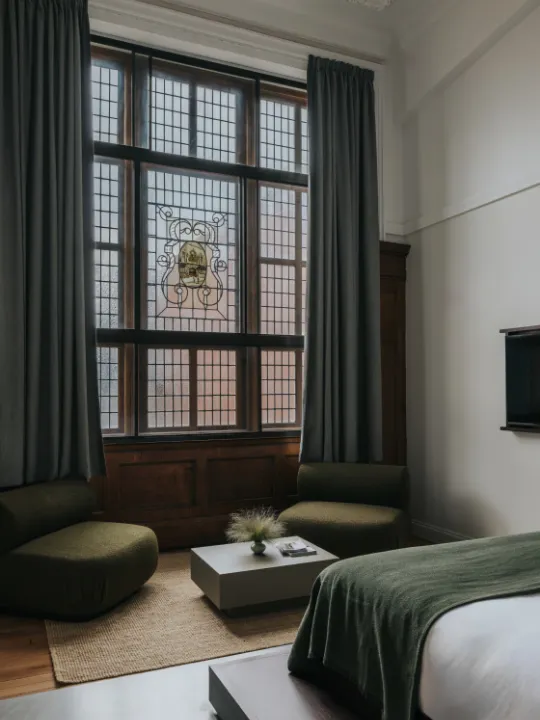
Willliam Riordan


Glasgow has never tidied itself up for visitors, and that’s exactly its appeal. Its Victorian streets still have soot in the cracks, its art school still feeds one of Britain’s boldest art scenes, and right now, its kitchens are the reason to come.
A new wave of small, chef-led restaurants has opened across the city, cooking with the same confidence as its galleries and music venues. “A new generation of places like Gloriosa, Outlier, Kaf, and Corner Shop sits alongside institutions that have been around for decades, like The Laurieston and The Pot Still,” says William Riordan, the creative force behind Arthouse, our first hotel in Glasgow. His tip: “Eat your way across the city and leave room for a pint somewhere historic.”
Then walk off dinner by the river. The River Clyde, which the city long turned its back on, is coming back to life. In Govan, Riverside Park has turned shipyard docks that lay derelict for nearly 40 years into green space on the water, and from May, the restored Rotunda brings live music back to the Finnieston bank opposite. Then cross to the Southside, where the sandstone terraces of Alexander “Greek” Thomson, the Victorian architect Glasgow ranks alongside Mackintosh, line the quiet back streets of Strathbungo.
Arthouse sits on Bath Street in the cultural district, in a 19th-century townhouse that has long been part of the city’s fabric. The building was stripped back rather than remodeled, leaving exposed brick, timber, and glazed tile on show. On the ground floor, Dean and Anna Parker’s Celentano’s has found a new home, cooking over embers with the same seasonal, nose-to-tail approach that won it a Bib Gourmand. Partnerships with the Glasgow School of Art and Glasgow International keep the city’s artists close.


Lapland doesn’t have four seasons, it has eight, and each one changes the landscape entirely. In early winter, the polar night bathes the forest in blue for hours at a time. By March, the snow is deep, the light returns, and the northern lights still flare above the spruce. Autumn brings ruska, when the hills above the tree line burn red and gold, and in June the sun simply doesn’t set.
Around Sodankylä, in the heart of Finnish Lapland, you feel it all at full scale. The forest runs unbroken to the horizon, the Kitinen River winds slowly through it, and reindeer wander across empty roads. Pyhä-Luosto National Park, a short drive away, offers ancient fells and silent trails, and even an amethyst mine where you can dig for your own stone. Further north, the village of Vuotso marks the gateway to Sápmi, the Sámi homeland. And in June, the Midnight Sun Film Festival, founded in 1986 by the Kaurismäki brothers and fellow filmmakers, screens films through the bright night.
In the village of Aska, Noa Villas sits on the bank of the Kitinen, far from any light pollution. “One of the most interesting decisions in hospitality is what to leave alone,” says Lina Baronaitė, who brought the property to life. “In Lapland, the landscape already gives people a reason to come.” Helsinki-based Studio Puisto shaped the villas to follow the riverbank, building in local timber and keeping the lighting low, so the stars stay bright. At dusk, when the forest turns blue and the river slips from view, floor-to-ceiling windows let you watch the last of the light, and in some villas the evening moves from your own sauna to a private hot tub under the Arctic sky. “I’d like people to go home remembering Aska as vividly as they remember the villa,” Lina says.


Laguna Beach was founded by artists, and for decades its culture came in a summer burst of festivals. Now it’s spreading through the rest of the year. A restored 1930s cinema on Coast Highway screens independent films again, curated by the town’s own film foundation. Forest Avenue, closed to cars during the pandemic, is becoming a permanent plaza with live music on summer weekends. New curator-led galleries are opening, and surfing is getting its due: the Surfing Heritage and Culture Center, often called the Smithsonian of Surfing, is moving downtown, 200 yards from the sand at Main Beach.
Head north to Napa Valley and you’ll find a wine region in the middle of a reinvention. After years of formal tastings and big-ticket estates, a downturn has pushed wineries to loosen up: smaller producers, organic farming, more personal hospitality. In St. Helena, the valley’s small-town heart, a cult winery now pours inside a 1930s Art Deco bank on Main Street, and the car-free Napa Valley Vine Trail lets you cycle from vineyard to vineyard. Some tours now skip the wine altogether.
Le Petit Pali has a home in both, created by Avi Brosh and Kirsten Leigh Pratt, the husband-and-wife team behind Palisociety. In Laguna, it occupies a midcentury seaside lodge on the town’s southern shoreline, with grass-cloth walls, deep-red ceiling beams, and a palm-lined pool courtyard. In St. Helena, its 29 rooms sit among olive trees and vines, with a pool overlooking the vineyards and bicycles waiting at the door. Both serve champagne at breakfast and leave cookies outside your room each night. “We’re not applying a look,” Avi says. “We’re applying a vibe and a way of thinking.”

Tien Nguyen (Founder & Designer)

Hue has always moved at its own pace. As the seat of the Nguyen emperors for nearly a century and a half, the former imperial capital kept its walled citadel, its royal tombs along the Perfume River, and a cuisine refined for the court. What’s changing now is how its young people are carrying all of that forward.
Across the city, a new generation of founders is turning heritage into something to live with rather than look at. There are cafés inside traditional wooden rường houses, studios reviving the Nguyen-dynasty ao dai (the long tunic that became Vietnam’s national dress), and young artisans bringing ceramic mosaic inlay into everyday objects. The Hue Festival now runs all year, but some of the city’s best moments happen away from the stage: a morning in one of the city’s walled garden houses, where families still tend orchards behind ironwood gates, or a drive out to Phuoc Tich, a riverside village that has been firing pottery for five centuries.
“Hue does not need to reinvent itself to be extraordinary,” says Tien Nguyen, the designer behind aNhill Boutique. “Its greatest charm lies in being unmistakably itself.”
That idea runs through aNhill Boutique, a family project on the pine-covered slopes of Thien An Hill, near the imperial tombs. Tien designed it all, from the architecture to the gardens, drawing on the ornate tomb of Emperor Khai Dinh, the cloisters of nearby Thien An Monastery, and the bold geometry of the Katu people. Board-marked concrete, corridors striped with light and shadow, and deep Katu red in the villas follow from those references, and a cloud motif quietly repeats on doors, tables, and planters. “We wanted to create something that could only belong here,” he says.
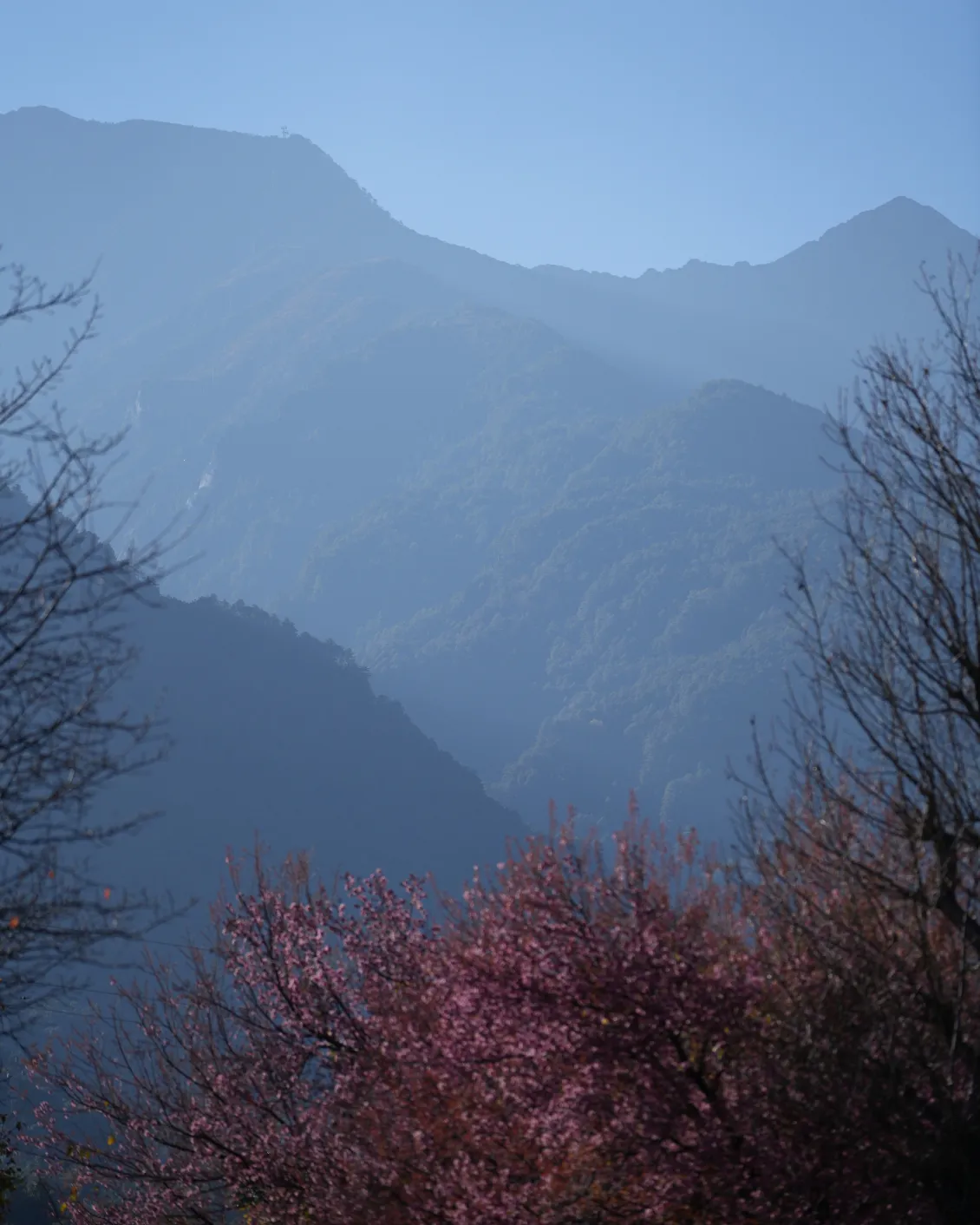
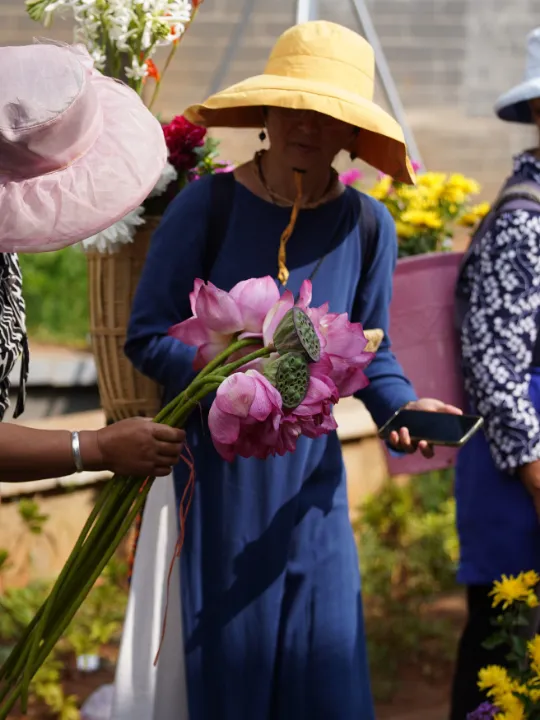
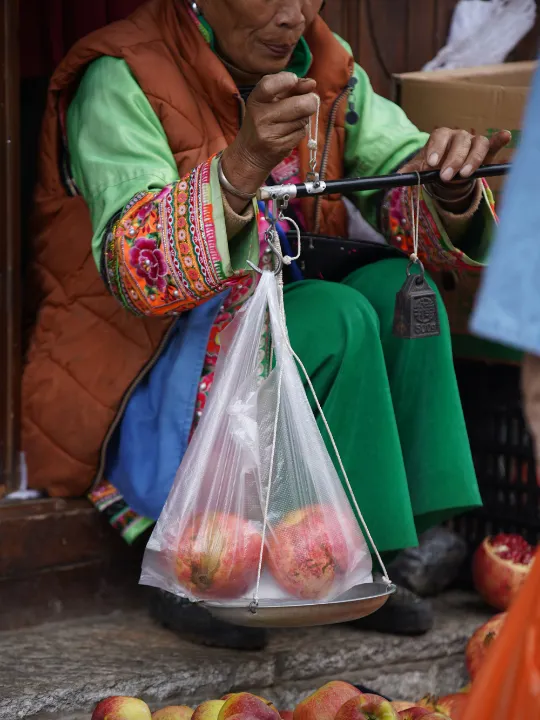


The former Bai kingdom between the Cangshan mountains and Erhai Lake once drew painters, poets, and backpackers. Now a new generation is leaving the megacities for it, and they’re building something of their own from what’s around them.
At the newly renovated Trout, chef Xu Kai, formerly of Eleven Madison Park and The French Laundry, serves Yunnan produce and Yunnan wine on local tableware. Ben Ka brews the province’s own coffee beans, and furniture designer Shun Li Li turns leftover timber and scrap metal into sculptural pieces. When the summer rains come, wild mushrooms fill the markets. “Today, a stay in Dali has evolved beyond its romantic, postcard-perfect scenery into an immersive exploration of local life—from foraging for mushrooms in the mountains and paddleboarding on the lake to discovering village traditions,” says [NAME].
In the old town, Anyu Dali has turned a century-old house into just ten rooms, with dark timber beams, worn wooden furniture, and warm light. From the terrace you can see across the old town’s rooftops to the Cangshan peaks, snowcapped in winter. The group’s motto roughly translates as “a peaceful corner, an old friend far from home.”


Xxxxxx


Across the lake, in the Bai fishing village of Shuanglang, Sisan Shuanglang grew out of a friendship. In 2008, designer Xie Ke found a small inn here and became friends with its owner. A decade later, the owner asked him to reimagine it. Xie set himself two rules: don’t block the lake, and don’t build higher. Its 14 rooms sit on two floors between a front courtyard and the water, finished in warm timber, sand-colored plaster, and midcentury furniture. “The landscape is already beautiful, so the design should hold back and step aside,” he says.


Bangkok’s art scene has never had more momentum. Dib Bangkok, a 7,000-square-meter museum in a former 1980s warehouse near Khlong Toei, has joined Bangkok Kunsthalle, and until the end of February the Bangkok Art Biennale fills the city’s temples, museums, and malls. More and more, though, that energy is moving out of the city.
Two and a half hours northeast, Khao Yai was long where Bangkok families went for cooler air and a long weekend. Now the capital’s creative crowd goes too. Marisa Chearavanont, founder of Bangkok Kunsthalle, opened the Khao Yai Art Forest as its counterpart. She calls the two “two sides of the same coin.” It covers 160 acres of once-degraded land that is being replanted, with works by artists such as Louise Bourgeois, whose giant spider Maman stands among the trees, and Fujiko Nakaya, whose fog sculpture drifts through the forest. There is also a bar designed by the artist duo Elmgreen & Dragset. Around it are vineyards, farm-to-table kitchens, and design-led cafés.
Sala Khaoyai sits on a hilltop facing the national park. Its architects, the Bangkok studio Onion, put only a pavilion, a run of terraces, and a pool on the summit, and let the landscape do the rest. The villas follow the same idea: each has its own pool and rooftop seating, with soft curves, warm neutrals, and freestanding tubs set against mirrors that reflect the hills.





 Profile
 Bookings
 Benefits
 Bookmarks
 Exclusive Community Deal