
Words & Images Mónica Barreneche
For a long time, Medellín was a city told from a distance, first with fear and later with astonishment at its rebirth. Today, it’s beginning to occupy a different place on the global radar: not as a destination reinventing itself to please but as a city that has learned to live with its contradictions. Set in the narrow, dense Aburrá Valley, Medellín forged an intense, industrious, and reserved identity: a culture accustomed to protecting its own and to building a clear and recognizable voice from within.
That reserve has not faded with time. It remains an essential part of the city’s character and perhaps one of the reasons Medellín does not reveal itself immediately or yield to a first visit. Its cultural, creative, and gastronomic scenes operate far from mass tourism and are articulated through local networks where architects, chefs, artists, designers, and entrepreneurs—the quiet protagonists of the city’s transformation—converge. Medellín unfolds in layers, through conversations and days spent with those who live there.
Understanding Medellín, then, means accepting that there is no single point of entry. Food, however, remains one of the most revealing ways. Not as a checklist of restaurants but as a living archive of habits, rhythms, and shared memory. Medellín is not an easy city to navigate on foot; its topography demands that it be understood in fragments. But it becomes legible in its bars, around certain shared tables, and—if you’re lucky and it’s December—in those novenas that shut down an entire block and turn public space into a communal living room.
Camelia, Sambombi, Carmen, Soilo C, Silo Cocina, La Sere, El Ramal, Susurro, SdvwR.O, Primer Piso, Mala Audio Bar, Siete Pulgadas, Café Dragón
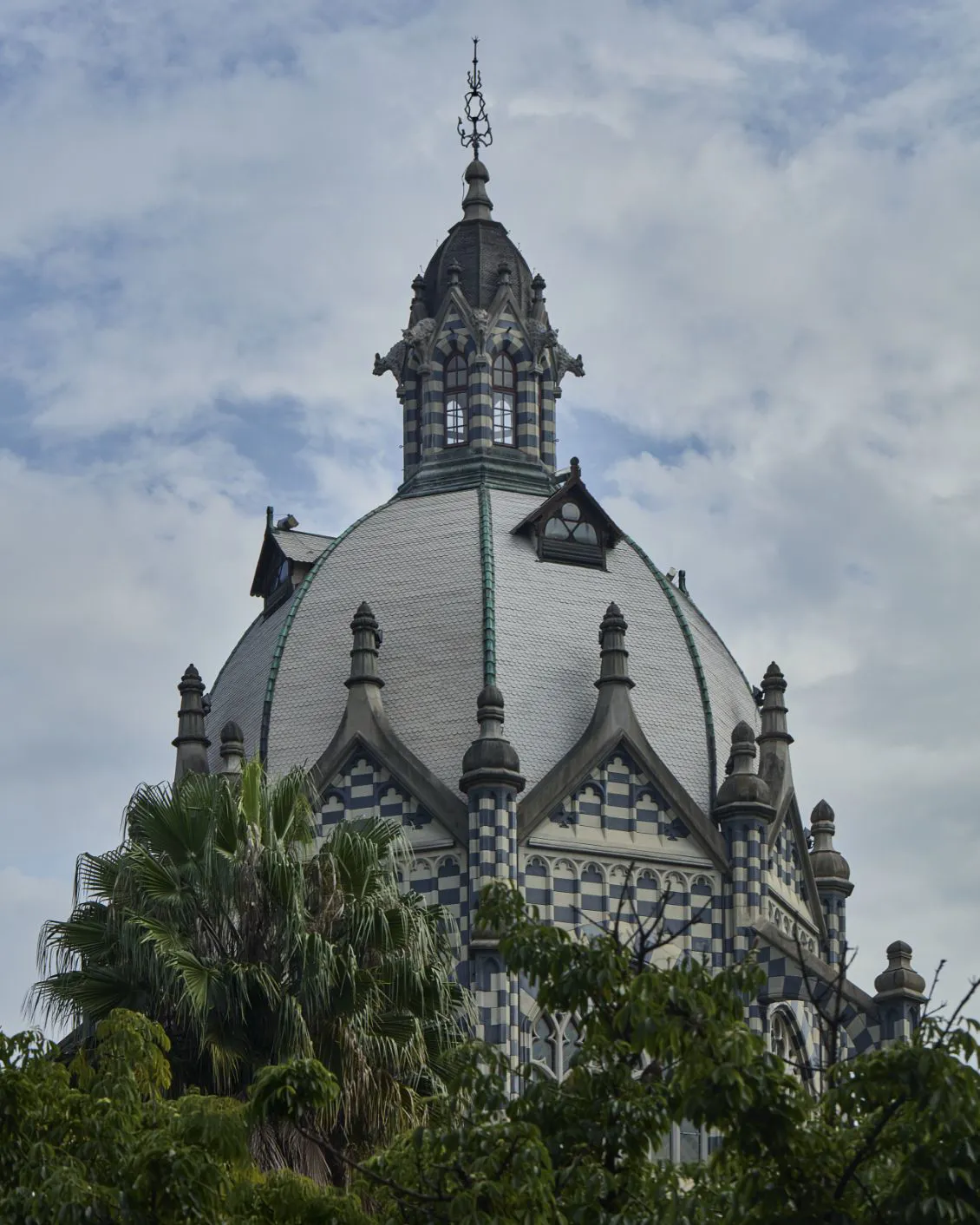
Museo de Antioquia, Casa Museo Pedro Nel Gómez, Medellín Museum of Modern Art (MAMM), MARM
Polícroma, La Cometa, La Balsa, Casa Ensō
Pergamino, Pbuxayino, Clus Clus
Makeno, Andrés Pajón, Andrea Landa, One Half

Camila Vélez, founder and chef behind the restaurant Camelia

Starting with the stomach is not a cliché; it’s a method. Chicharrón, mazamorra, solteritas, and bandeja paisa are a daily ritual. “Paisa food isn’t sophisticated—it’s substantial,” says Camila Vélez, founder and chef behind the restaurant Camelia. “That’s where its strength lies: in flavor, in what’s repeated every day.” According to Camila, the best cazuela de frijoles, a bean casserole that’s considered the most traditional dish in paisa cuisine, is found at Ajiacos y Mondongos. “That’s where you understand how the city eats when it’s not trying to perform.”
To understand Camila’s direct and unadorned work more deeply, you have to go to Camelia, her almost hidden kitchen created for diners willing to be guided. There is no menu or spectacle, just an intimate, ever-changing meal served family-style and designed to spark conversation. Camelia doesn’t attempt to represent Medellín, a city with a broad and growing culinary scene. It interprets it from the inside, with the same reserve with which the city offers itself to the attentive visitor.
That restraint also appears in the way Medellín has been built and rebuilt. If cuisine allows the city to be read from the table, architecture reveals how it learned to look at itself—and to present itself—in space. Built atop steep hillsides and improbable slopes, the city shifted in just a few decades from a domestic, inward-looking logic to a regional reference for contemporary architecture—not through monumentality but through an increasingly conscious relationship with landscape, public space, and greenery.

Architect Santiago Arango of ALH DJing at Atmala Bar

This shift was consolidated by a generation of architects who redefined the scale and meaning of the urban. Felipe Uribe de Bedout, Plan:B Arquitectos, and Agenda, among others, expanded the conversation around materiality, territory, and public space. One of the most engaged observers of this process is Santiago Arango. Born in Bogotá, he arrived in Medellín in 2011 and encountered a conservative, deeply domestic city. “Fifteen years ago, Medellín was a different place. High quality of life but limited,” he recalls. The change was swift. In just a few years, new cultural expressions emerged; the creative scene became more visible, and the city opened rapidly to the world. From his studio, ALH Arquitectos, Arango has played a key role in shaping Medellín’s contemporary architectural identity—an aspect that now makes the city more legible than ever.
That openness, however, does not imply a loss of identity. Within a society curious about what happens beyond its borders yet determined not to dilute what is its own, a generation of young designers eager to build and experiment has emerged. Among them is Daniel Correa, director of the studio 5 Sólidos. Experiencing the city through him is to see it with attentive eyes: sampling a bit of everything at Susurro, crossing the street to end up at the vinyl bar Siete Pulgadas, or stopping for a tinto—the local term for black coffee—at Clus Clus.


Designer Daniel Correa of 5 Sólidos, one of design studios behind Wake Medellín and Wake BioHotel
Beyond the places themselves, Daniel embodies a distinctly paisa way of inhabiting the city: brief conversations, full attention to the other person, and a genuine interest in what others have to say. In local terms, simply put, gente amable—kind people. It is in this everyday gesture—more than in any formal discourse—that one understands how Medellín opens itself to the world without ceasing to be itself. That kindness, however, does not mean immediate access. Courtesy is only the beginning. There is a subtle distance between greeting and trust, a way of observing before fully opening up. First, they test the waters. Once that silent test is passed, the city shifts tone: Doors open, and the experience moves from individual to shared.
If anyone embodies a kind of antithesis of the paisa spirit—and at the same time its most faithful expression—it is Gloria Saldarriaga. Trained as a graphic designer, she gradually became a reference in fashion, a connoisseur of Colombian art, and above all, a tireless observer of beauty. “It’s always there, if you know where to look,” she says. “And often in the simplest things.”
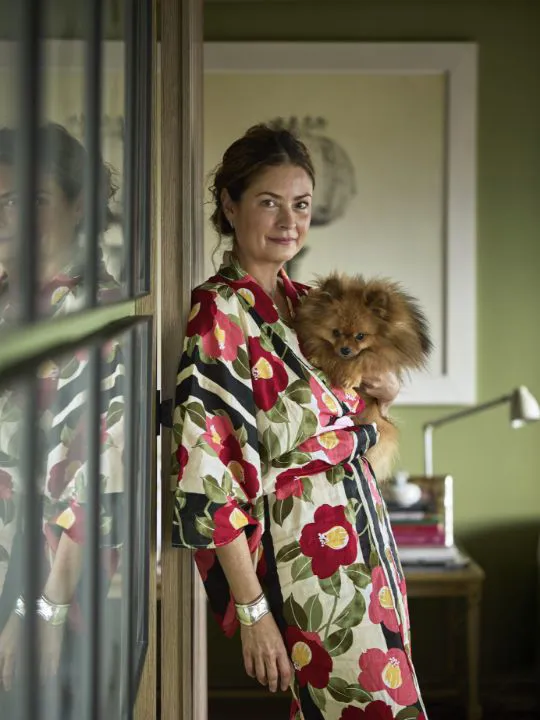
Gloria Saldarriaga at home in the El Poblado neighborhood
In parallel, Medellín has been consolidating itself as a place where well-being is not presented as a promise but as a daily practice. “Medellín has an incredible amount to offer in this field,” says David Luján, co-founder and CEO of DRIM, the hospitality group behind the Wake hotels. “If something defines paisas, it’s their willingness to do what it takes to innovate.” In his view, the appeal goes beyond image: “We’re not just pioneers in aesthetics; we’re also leading research and treatments focused on improving quality of life.”
In the end, Medellín is a city that contradicts itself without canceling itself out. It wants to move forward without losing the conditions that sustain it: a gentle climate, a landscape that is always present, a family-centered way of life that still sets the pace, and a social fabric that privileges closeness.
There is, of course, an immediate impact tied to greenery: mountains always within reach, vegetation everywhere, and a constant sense of air and light. But what ultimately anchors the experience is the human factor. “Here, you step into an elevator and people say good morning,” David laughs. “And without realizing it, by the end of your stay, you’re greeting everyone on the street.”

This story appears in the latest issue of Directions magazine. Reimagined for 2026, the magazine is now in a broadsheet format, designed for you to read, fold, toss in your bag, and carry home with you. Visit one of our hotels around the world to pick up your copy.





 Profile
 Bookings
 Benefits
 Bookmarks
 Exclusive Community Deal